

Al contenuto della pagina

Drum machine

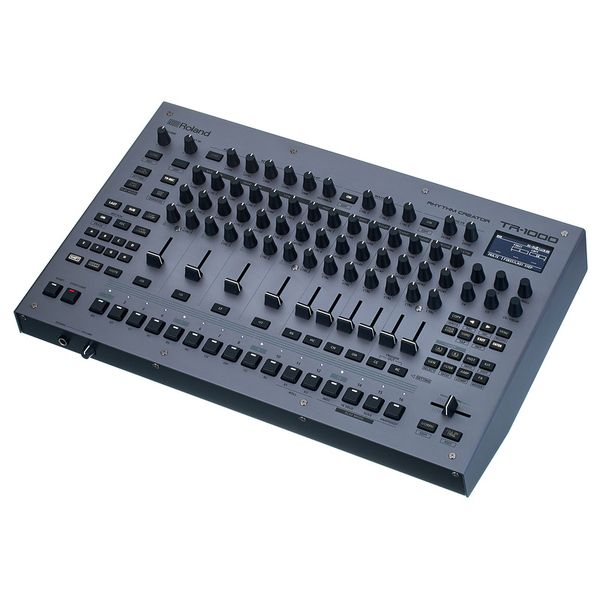
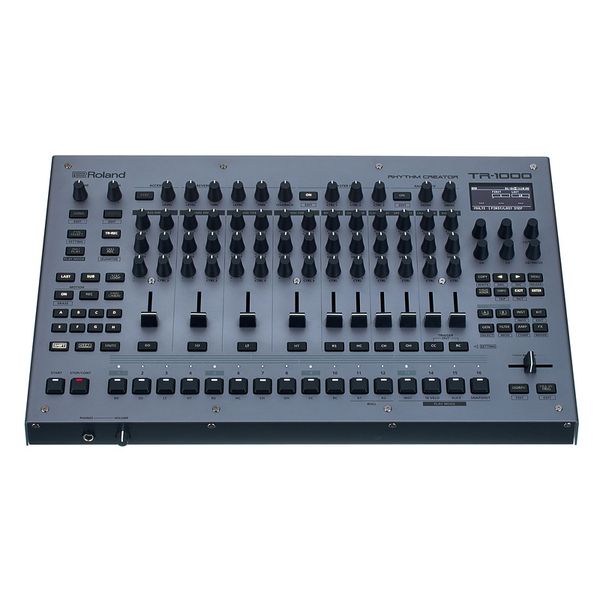
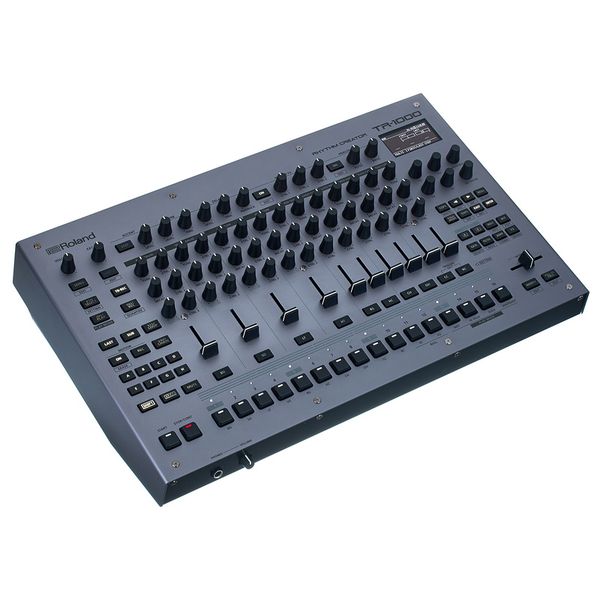
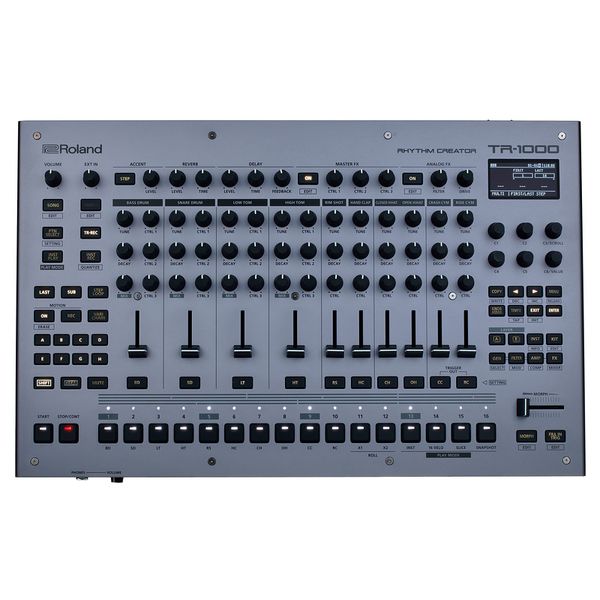
  • Rhythm Creator
  • 16 strumenti analogici con l'autentico suono dei modelli TR-808 e TR-909 e funzionalità avanzate
  • 10 strumenti analogici TR-808: grancassa, rullante, tom basso, tom alto, rim shot, battito di mani, hi-hat aperto, hi-hat chiuso, piatto e campanaccio
  • 6 strumenti analogici TR-909: grancassa, rullante, tom basso, tom alto, rim shot e battito di mani
  • 50 diversi sound engine ACB (Analog Circuit Behavior) con un'ampia gamma di parametri
  • Sintesi sonora FM per percussioni digitali
  • Sintetizzatore analogico virtuale e oltre 2500 campioni PCM per suoni di basso, di sintetizzatore, effetti e altro ancora
  • Campionamento stereo e re-sampling con time stretching e beat slicing
  • 46 GB di spazio di archiviazione per i propri campioni (16 bit / 48 kHz)
  • Per ogni strumento: compressore, filtro (filtro multimode o equalizzatore a 4 bande), amplificatore con inviluppo
  • 4 strumenti con funzione Layer (2 motori sonori), Sidechaining e Modulations-LFO
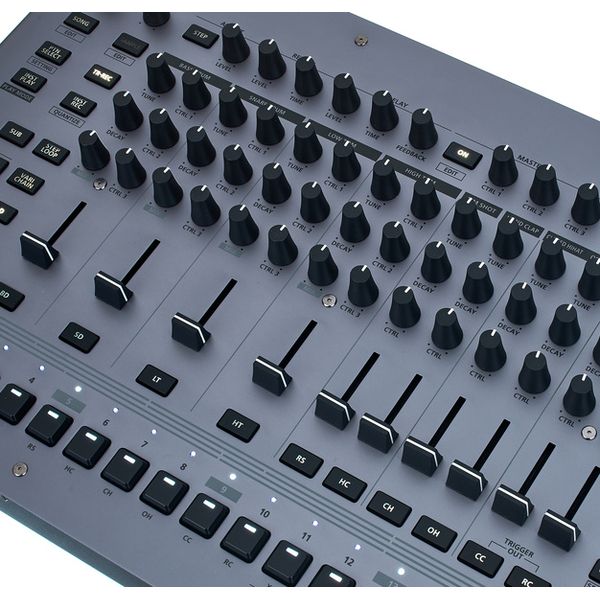
  • Step sequencer con 10 tracce e un massimo di 128 step per traccia
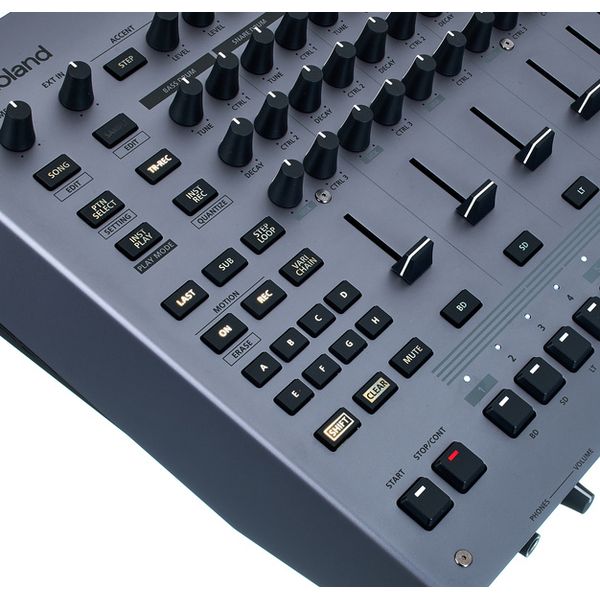
  • TR Recording, Realtime Recording e Motion Recording per l'automazione dei parametri
  • Spazio di archiviazione per 16 progetti, 2048 pattern e 2048 kit di batteria
  • Sezione effetti Master con filtro analogico e Drive, effetti Insert digitali, compressore, riverbero e delay
  • Fader Morph per la dissolvenza delle impostazioni dei parametri
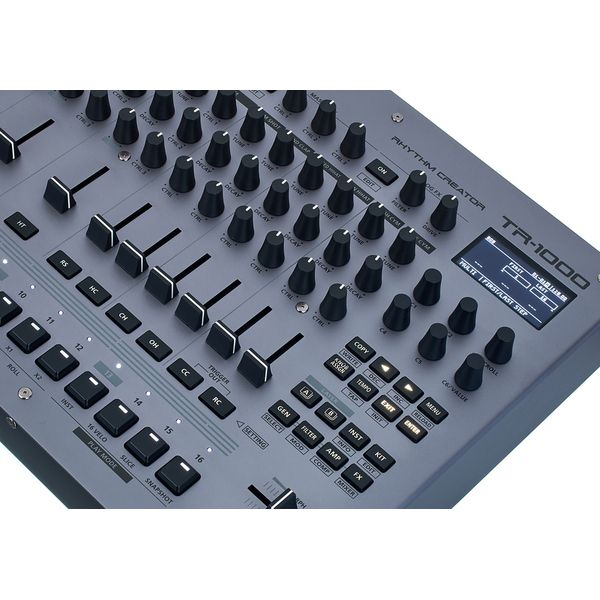
  • 42 controlli e 10 fader per l'editing degli strumenti
  • Schermo OLED e 6 encoder
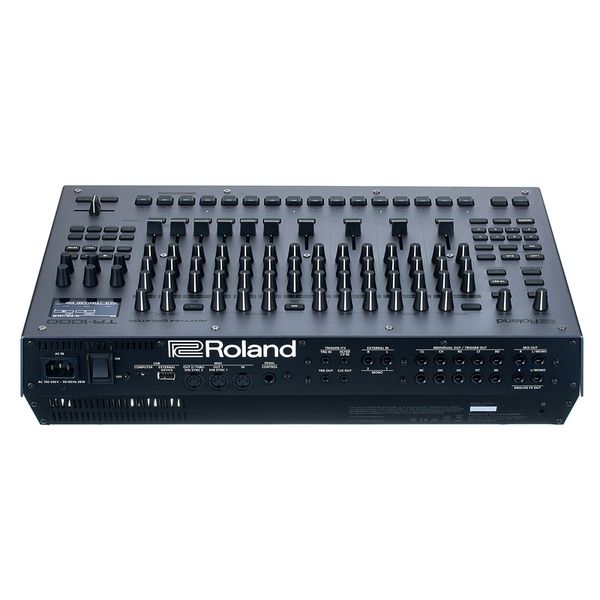
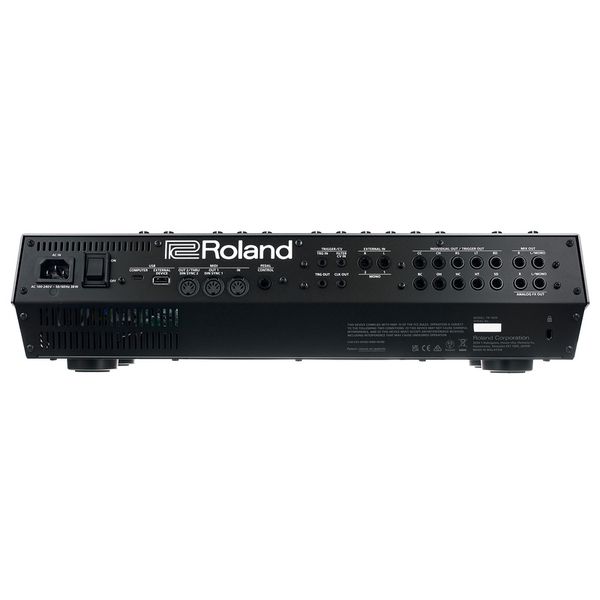
  • Uscita Mix: 2 jack da 6,3 mm
  • Uscita Analog FX: 2 jack da 6,3 mm
  • 10 uscite singole: jack da 6,3 mm
  • Uscita stereo per le cuffie con controllo del volume: jack da 6,3 mm
  • Ingresso esterno: jack da 6,3 mm
  • Ingressi Trigger e CV: 2 jack da 3,5 mm
  • Uscite Trigger e Clock: 2 jack da 3,5 mm
  • Ingresso del pedale: jack da 6,3 mm
  • MIDI In, Out 1, Out 2 / Thru (DIN a 5 poli)
  • Porta USB-A per dispositivi esterni e supporti di archiviazione
  • Porta USB-C per audio e MIDI USB
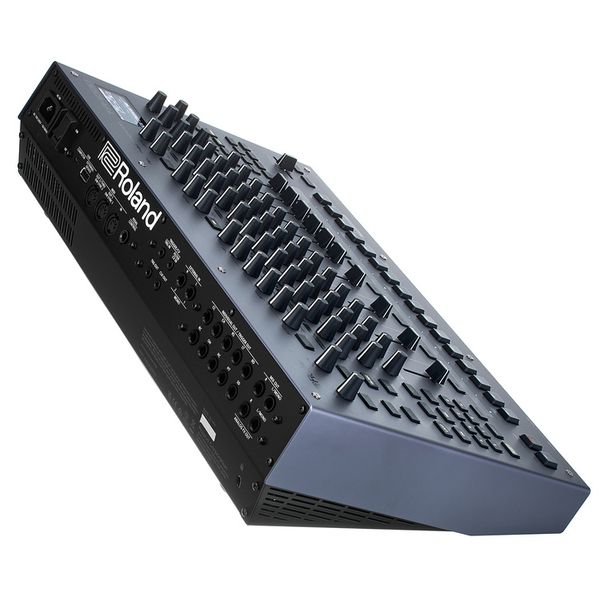
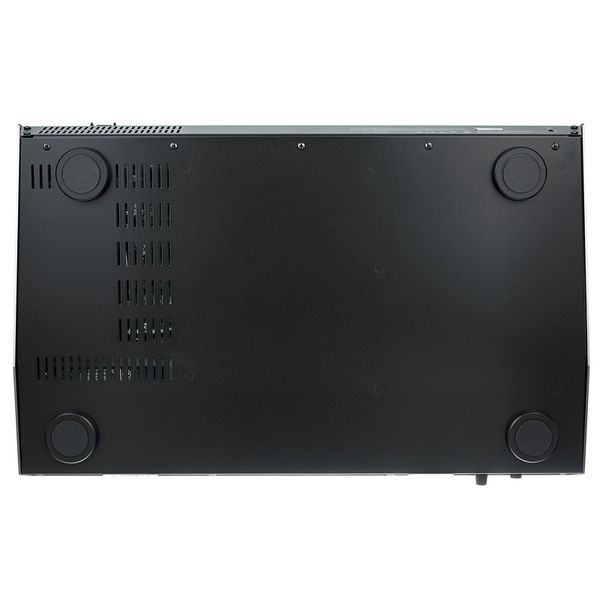
  • Robusto alloggiamento in metallo
  • Dimensioni (L x P x A): 486 x 311 x 125 mm
  • Peso: 5,5 kg
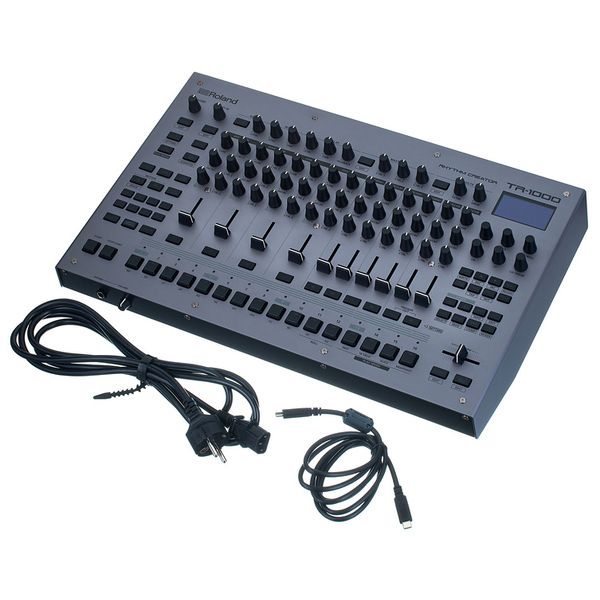
  • Include cavo di alimentazione, istruzioni per l'uso e cavo USB-C
  • In catalogo dal Ottobre 2025
  • Numero di articolo 623272
  • Unità incluse 1 Pezzo
  • Sintesi sonora Analogico, basato su sample, sintetizzatore
  • Pads 16
  • Effetti Si
  • Basso Si
  • Visualizzazione Si
  • Interfaccia MIDI In, Out, Thru
  • Quantità di Uscite Analogiche 14
  • Jack per cuffie Si
  • Funzionamento a rete Si
  • Funzionamento a batteria No
  • Fader 10
  • Funzioni di campionamento Si
  • Supporto di memorizzazione Interno
  • Connessione del footswitch 1
  • USB Si
  • Caratteristiche speciali Modulo sonoro ibrido
  • Tipo Desktop
€ 2.790
Tutti i prezzi incl. IVA
Disponibile fra diversi mesi
1

16 Valutazioni dei clienti

4.6 / 5

uso

Caratteristiche

Suono

Qualità

12 Recensioni

google translate gb
Purtroppo si è verificato un errore, ti preghiamo di riprovare più tardi.
JM
Interesting instrument, but...
John Monolith 11.07.2026
I have been using the Roland TR-8S almost since the day it was released, so I was immediately excited when I first heard about the TR-1000. After watching the initial reviews, I could clearly see that it was a close relative of the TR-8S, and I started waiting for the first opportunity to finally buy this long-awaited instrument. However, Roland took quite a long time to make it available.

Eventually, I received my TR-1000, and I would now like to share a detailed comparison for anyone who is still considering it or having doubts.

Sound
1. The sound has genuinely improved compared with the TR-8S. Thank you, Roland.
2. The analog filter and distortion sound great.
3. The reverb and delay are essentially the same as before. They still have no additional or hidden parameters to adjust.

Hardware
1. Roland removed the dedicated Shuffle/Swing knob. You now have to dive into the menus just to change this parameter.
2. There are many assignable knobs, which sounds useful in theory. In practice, however, some of them remain completely unused in many kits and instruments because there are either too few assignable parameters or none at all.
3. A dedicated Stop button that can be disabled is definitely a win.
4. The additional analog clock connections are also a welcome addition.
5. The Fill In Trig button is located in a very inconvenient position.

UX
1. The Cue mode is inconvenient to use. There is also no way to send the Ext In signal to Cue.
2. The instrument settings are mostly the same as on the TR-8S, although they are now organized a little more logically and are not scattered across the menus quite as badly.
3. There are also some minor interface issues. For example, when trying to select a higher Auto Off value, it sometimes simply does not work.
4. It is not entirely clear why there is a dedicated Vari Chain button when variations can still be selected by holding down their corresponding buttons, just as they could on the TR-8S. What exactly does this button improve or change in the workflow?

Morph
Morph is a great idea that does not work particularly well in practice.
In reality, it is not really morphing. It is simply several parameters assigned to a single fader. As I mentioned earlier, many instruments have a very limited number of assignable parameters. As a result, the function often fails to reach its full potential.

Scatter
On the original TR-8S, Scatter was my favorite and most frequently used effect. I always had it assigned to Fill In Trig.
By using it together with Ext In, I could create drum fills and transitions without really having to think about them, relying entirely on my sense of rhythm. It was especially useful because Fill In Trig could operate in Momentary mode.
On the TR-1000, Scatter has been moved into the MFX section, but Roland did not add a Momentary mode. It is now limited to Latch operation. As a result, turning drum fills on and off has become an extremely inconvenient process.

Overall Impression
At the moment, I feel that I will probably use the TR-1000 for one or two live performances, then put it on a shelf as part of my collection and continue using the TR-8S.

The TR-8S is simply more convenient for live performance.

I hope that someone at Roland reads this review and improves the instrument, because in its current state, the TR-1000 sometimes feels more like the SH-4d in terms of usability.
uso
Caratteristiche
Suono
Qualità
4
0
Segnala un abuso

Segnala un abuso

google translate gb
Purtroppo si è verificato un errore, ti preghiamo di riprovare più tardi.
i
Superb dark techno machine, with one flaw Thomann handled well
invstgtr 14.07.2026
I use the TR-1000 as the rhythmic core of a hardware-first techno setup, and as an instrument it delivers. The analog and digital hybrid engine covers everything from deep sub kicks to sharp industrial percussion, and the depth of per-step editing, motion recording and variations makes it a proper performance and sound-design tool, not just a drum machine. The sound quality is excellent and it sits comfortably alongside serious gear.
The one real issue: after about eight months, the coating on the PTN SELECT button started peeling. This is a known production-run defect, not something caused by use. What matters is how it was resolved. Thomann's export service handled it properly, arranged a prepaid warranty return, confirmed with Roland that all buttons would be replaced with a revised type that will not peel again, and supplied the customs documentation for the return. Communication was clear and patient throughout. The unit is still in for repair as I write this, so I cannot yet confirm the fix long-term, but the support experience has been exactly what you would want when a flagship product has a defect.
If the button issue is behind it, this is a near-faultless machine for dark, industrial, analog techno. Recommended, with the note that Thomann stood behind it.
uso
Caratteristiche
Suono
Qualità
1
0
Segnala un abuso

Segnala un abuso

google translate gb
Purtroppo si è verificato un errore, ti preghiamo di riprovare più tardi.
M
Incredible
Muzman 17.12.2025
I had to wait some time to receive it, but it was love at first play. The construction is well built, premium materials. The knobs are not flimsy, but rubber and robust.
uso
Caratteristiche
Suono
Qualità
1
10
Segnala un abuso

Segnala un abuso

google translate de
Purtroppo si è verificato un errore, ti preghiamo di riprovare più tardi.
B
Überragend! Zu potent?
Butziolm 29.11.2025
Die TR-1000 ist hervorragend verarbeitet (Ausnahme die nicht verschraubten Einzelausgänge), klingt tief und mächtig und ist eigentlich fast die eierlegende Wollmilchsau: wenn sie noch eine vernünftige CV-Anbindung hätte (nicht nur Clock) und man per Midi andere Geräte steuern könnte (vgl. Digitakt), dann wäre sie wohl perfekt.
Bleibt die Frage, wer braucht ein solch überwältigendes Gerät? Vermutlich tun es Maschinen, die nur ein Viertel kosten, am Ende genauso. Ich frage mich derzeit, ob meine Musik mit der TR -1000 wirklich 2700€ besser wird. Die Feature-Liste ist schier unendlich, es gibt eigentlich nichts, was nicht geht. Bei alldem ist man in der Bedienung natürlich oft auf den sehr kleinen Bildschirm fokussiert, der leider auch nicht zentral, sondern in der Peripherie des Gerätes angeordnet ist. Wenn man also wirklich Sounds tweakt, ist man vorwiegend auf etwa 1/15 der Oberfläche des Geräts beschäftigt.
Schärfster Konkurrent derzeit ist sicherlich die Heckdrums von Erica Synth: ebenfalls analog, wahrscheinlich ziemlich tiefgehender und wuchtiger Sound (ich habe selbst noch keine gespielt), keinen Preset-Speicher, One- Note-Per-Function-Konzept. Und vor allem: kostet fast genau die Hälfte.
Mich persönlich erschlägt die TR -1000 einfach. Mal sehen, ob sie bleibt… Auf jeden Fall ein Gerät, nur für Profis, die nebenher auch nicht mehr sehr viel brauchen.

Update 30. Dezember 2025: Sie bleibt! Die Hexdrums sind klanglich viel zu eingeschränkt und vor allem nicht speicherbar. 2700€, klar, das ist viel, sind aber auch 14 analoge Stimmen. Da zahlt man bei Oberheim und co für 8 Stimmen beileibe nicht weniger.
Update 17. März 2026
Sie musste doch gehen, vor allem war das Multitrack-Recordning in Ableton und Logic faktisch unbrauchbar, da mit erheblichen Artefakten versehen, ferner ließ sich das Gerät kaum zur Midiclock synchronisieren, da gab es, trotz vieler Versuche, Timingprobleme von fast einer Sechzehntelnote (bei 133bpm, aktuelles update war natürlich aufgespielt). All das geht für ein 2700€-Gerät leider überhaupt nicht. Im übrigen: wer hört wirklich den Unterschied zwischen analog und acb_Emulation? Ich konnte sie im direkten Vergleich nicht wahrnehmen.
uso
Caratteristiche
Suono
Qualità
49
18
Segnala un abuso

Segnala un abuso