Al contenuto della pagina

Mooer Ocean Machine II Delay/ Reverb

4.0 su 5 stelle su 10 valutazioni dei clienti ()

Effetto a pedale per chitarra elettrica

  • Modello signature Devin Townsend
  • Due moduli di delay separati con 9 tipi di delay diversi per ciascun modulo
  • 15 tipi di delay in totale
  • Tempo di delay 0 - 2.000 ms
  • Effetto Ping Pong
  • 9 diversi tipi di riverbero e effetti shimmer
  • Catena di effetti programmabile in parallelo/serie con libera scelta della sequenza di effetti
  • Funzione Freeze
  • Funzione Tap Tempo
  • Looper con tempo di registrazione fino a 120 secondi
  • Impostazioni di equalizzazione globale personalizzabili e livelli di ingresso e uscita regolabili
  • True bypass o DSP bypass (bufferizzato)
  • 2 modalità operative: modalità Play per la modifica rapida dei parametri e modalità Patch per la selezione rapida dei preset
  • 8 banchi con 3 preset ciascuno
  • Funzione MIDI aggiornata con Clock Sync per sincronizzare il pedale con altri dispositivi MIDI
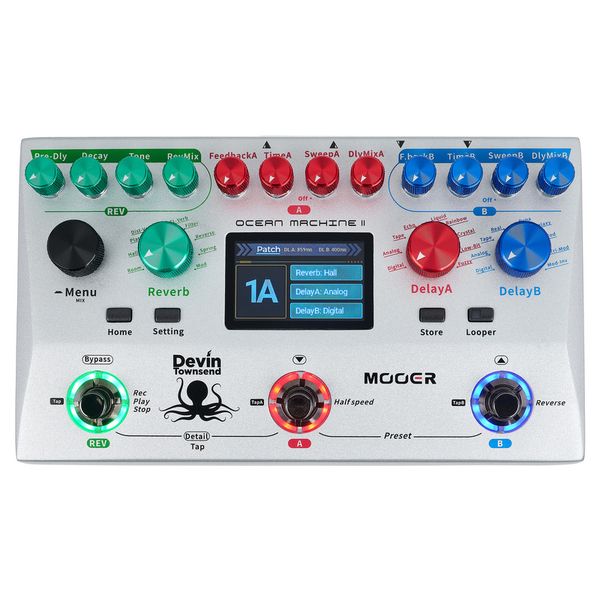
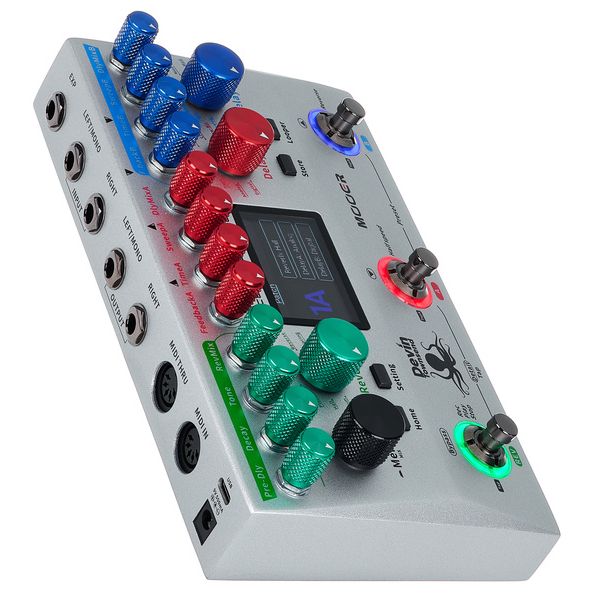
  • Controlli della sezione Reverb per Pre-Dly, Decay, Tone e R. Mix
  • Manopola Reverb per selezionare le modalità di riverbero: Room / Hall / Plate / Dist-Verb / FL-Verb / Filter / Reverse / Spring / Mod
  • Controllo della sezione Delay A per Feedback A, Time A, Sweep A e DlyMix A
  • Manopola Delay A per selezionare le modalità di Delay A: Digital / Analogue / Tape / Echo / Liquid / Rainbow / Crystal / Low-Bit / Fuzzy
  • Controllo della sezione Delay B per Feedback B, Time B, Sweep B e DlyMix B
  • Manopola Delay B per selezionare le modalità di Delay B: Digital / Analogue / Tape / Real / Dyna / Galaxy / Mod / Try-Mod / Mod-Inv
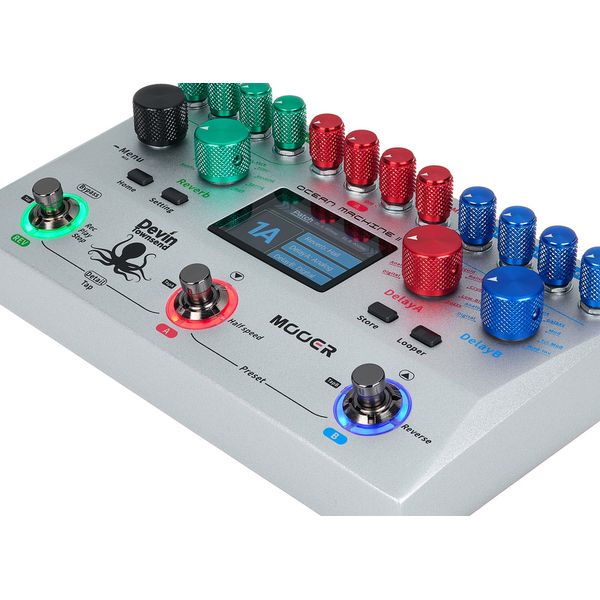
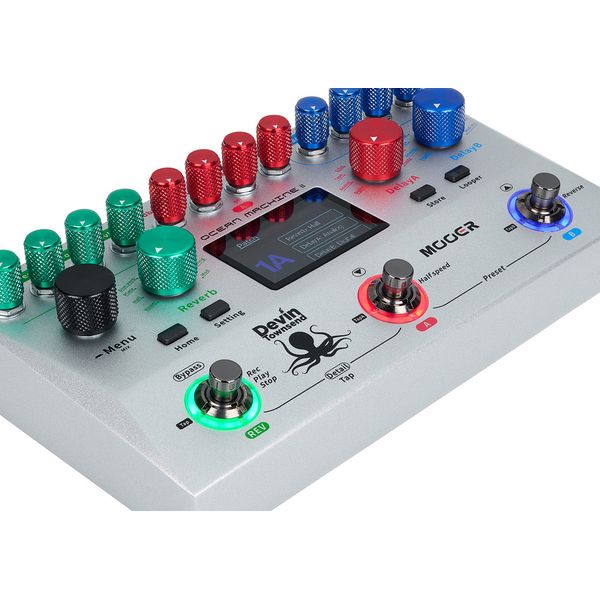
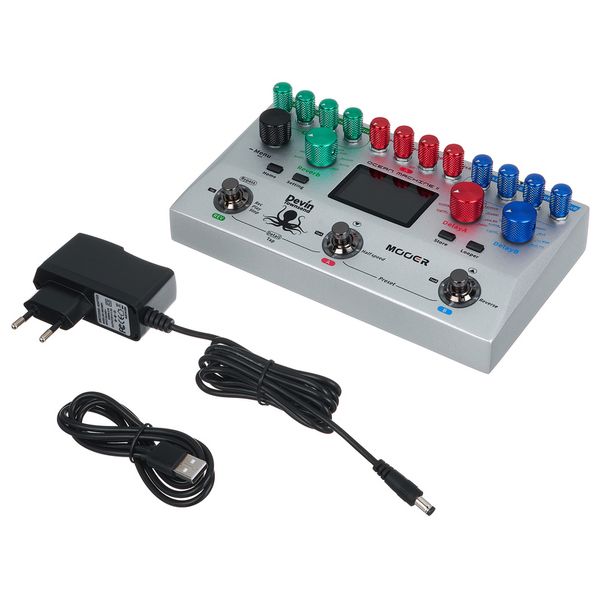
  • Footswitch per riverbero
  • Footswitch per Delay A
  • Footswitch per Delay B
  • Supporto per il controllo esterno con un footswitch wireless della serie MOOER F4
  • Pulsanti di controllo per Home, Setting, Store e Looper
  • Manopola Menu per navigare i menu di preset
  • LED di funzionamento
  • Alloggiamento in metallo
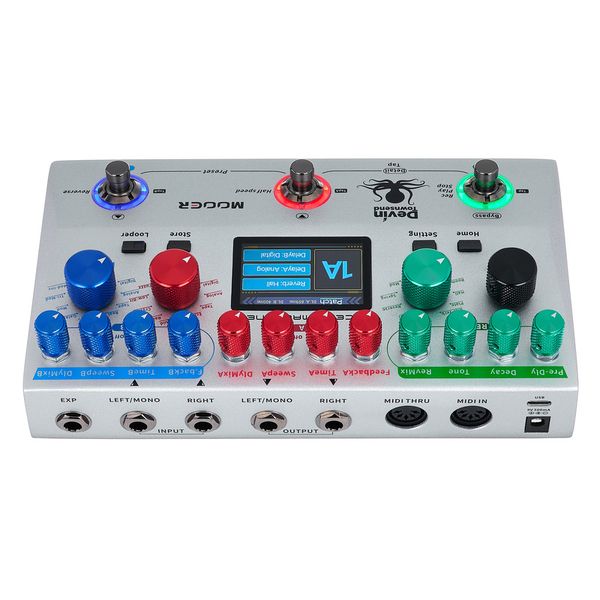
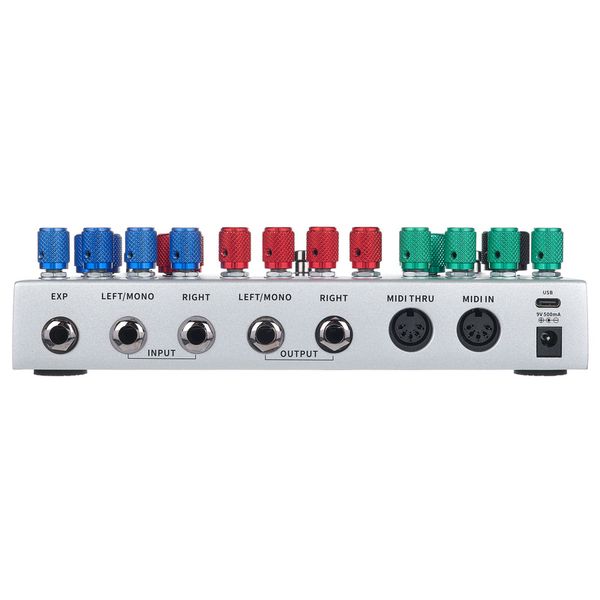
  • Ingressi jack mono L/R da 6,3 mm
  • Uscite jack mono L/R da 6,3 mm
  • Presa MIDI In
  • Presa MIDI Thru
  • Ingresso pedale d'espressione: jack stereo da 6,3 mm
  • Porta USB-C
  • Funziona con un alimentatore da 9 V DC, connettore a spina cava da 2,1 mm x 5,5 mm e polarità negativa interna
  • Assorbimento di corrente: 500 mA
  • Dimensioni (L x P x A): 215 x 127 x 56 mm
  • Peso: 1100 g

Attenzione: il funzionamento a batteria non è supportato

Nota bene Registra il tuo acquisto presso shop.warwick.de/en/warranty-registration per una estensione di garanzia a 4 anni.
  • In catalogo dal Settembre 2024
  • Numero di articolo 600270
  • Unità incluse 1 Pezzo
  • Analogico Si
  • Tempo di ritardo 2 s
  • Funzione TAP Si
  • Funzionamento a batteria No
  • Incl. alimentazione Si
  • Tempo di registrazione in minuti 120 m
  • Connessione USB Si
  • MIDI Si
  • Configurazione input/output Ingresso mono / uscita mono
€ 232
Tutti i prezzi incl. IVA
Disponibile
1

Un oceano di suoni avvolgenti

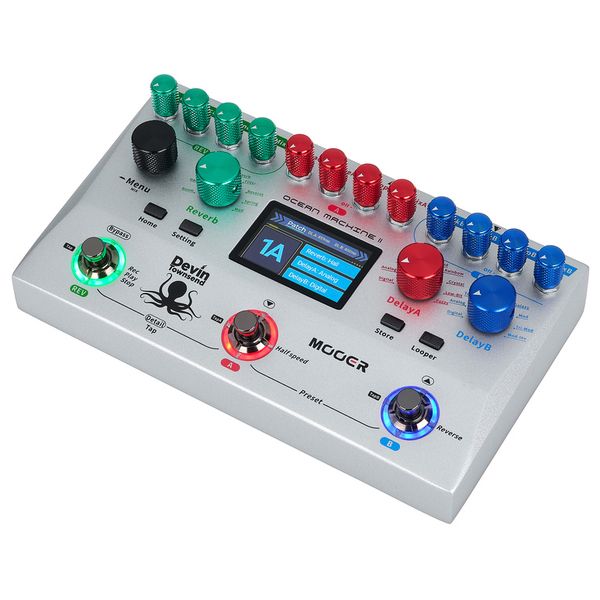
Il Mooer Ocean Machine II è il pedale signature del chitarrista, cantante e compositore canadese Devin Townsend. Questa seconda versione si presenta con un nuovo design e l’interfaccia USB. Dotato di tre footswitch, il potente pedale delay e riverbero offre un utilizzo intuitivo e consente di creare sia sonorità tradizionali che ampi passaggi sonori. Il tutto grazie all’interazione tra due sezioni di delay e una di riverbero, utilizzabili anche singolarmente. Dai semplici delay slapback e dagli echo ritmici fino alle interminabili code di riverbero, è possibile creare con facilità un’ampia varietà di texture sonore. I suoni creati possono essere salvati in 24 preset, richiamabili direttamente dal pedale o tramite MIDI e modificabili in tempo reale con un pedale d’espressione.

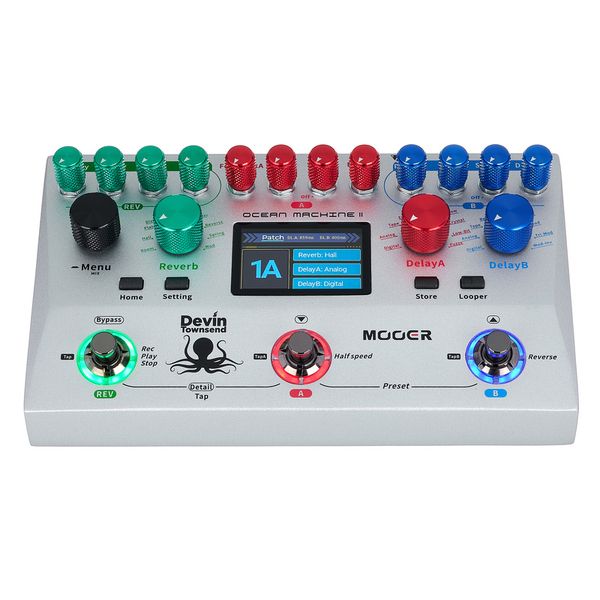
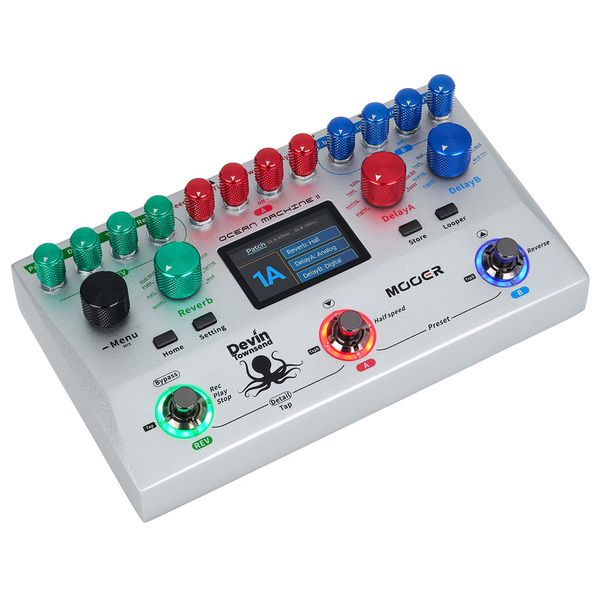
Footswitch e controlli sull’effetto a pedale delay/riverbero Mooer Ocean Machine II per chitarra elettrica

Tradizione e innovazione

Il Mooer Ocean Machine II combina due effetti delay indipendenti e mette a disposizione 15 algoritmi in totale, nove per ciascuna sezione. La gamma comprende simulazioni di delay analogici e a nastro, ma anche algoritmi con bitcrusher, pitch shifter e saturazione, capaci di offrire caratteri sonori molto diversi tra loro. Anche la sezione riverbero si dimostra particolarmente versatile grazie a otto algoritmi, che spaziano dalle classiche simulazioni di ambienti a effetti più sperimentali. Tra questi spicca lo Shimmer, che aggiunge armoniche al riverbero creando sonorità brillanti e suggestive. In modalità Preset è possibile passare tra otto banchi da tre preset ciascuno tramite i footswitch. In modalità Play, invece, delay e riverbero possono essere attivati singolarmente, combinati tra loro o disposti nell’ordine desiderato. Lo schermo a colori introdotto con la seconda versione migliora la leggibilità e facilita l’accesso alle impostazioni avanzate.

Collegamenti dell’effetto a pedale delay/riverbero Mooer Ocean Machine II per chitarra elettrica

Per tutti i generi

L’Ocean Machine II è ufficialmente destinato ai chitarristi. Grazie agli ingressi e alle uscite stereo, alla modalità Ping Pong e alla perfetta gestione dei segnali di linea, si rivela però un’ottima soluzione anche per tastieristi e produttori in cerca di sonorità ambient. Chi ama sperimentare trova qui ampio spazio per la propria creatività. I numerosi controlli, la possibilità di modificare l’ordine degli effetti e l’ampia scelta di algoritmi consentono infatti di plasmare il suono in modo intuitivo. Tutti i parametri possono essere modificati in tempo reale, senza interrompere il decadimento naturale degli effetti. Bastano pochi istanti per trasformare il segnale in ingresso in ampie texture sonore e paesaggi sonori in continua evoluzione. Non sorprende quindi che il Mooer Ocean Machine II possa suscitare l’interesse anche di produttori di musica elettronica e appassionati di sintetizzatori, soprattutto alla luce del prezzo particolarmente competitivo.

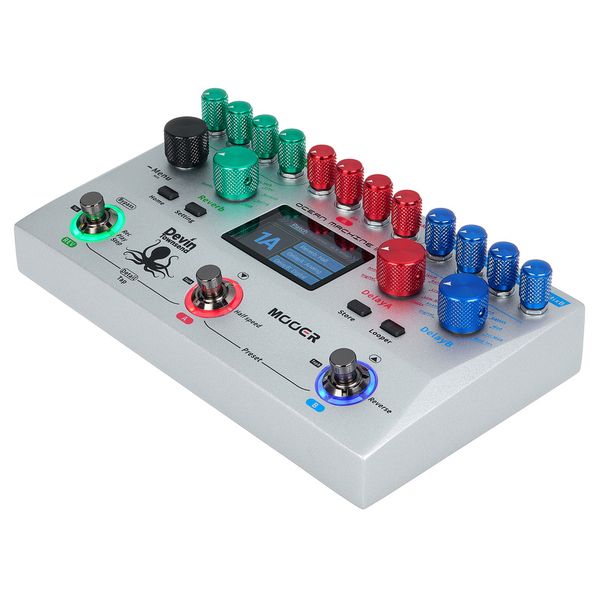
Schermo dell’effetto a pedale delay/riverbero Mooer Ocean Machine II per chitarra elettrica

Su Mooer

Nata a Shenzen (Cina), Mooer offre dal 2010 un’ampia gamma di prodotti per chitarristi, tra cui piccoli pedali singoli, dispositivi multieffetto e amplificatori compatti. L’azienda ha iniziato con la produzione di piccoli pedali, ottenendo il suo maggior successo con il sofisticato pedale delay Ocean Machine, realizzato nel 2016 in collaborazione con Devin Townsend. Mooer offre anche soluzioni con amplificatori modellati, simulazioni di cabinet basati su risposte all’impulso e Matching EQ. L’utilizzo di tecnologie digitali è da sempre il cuore pulsante dell’azienda.

Pratico e versatile

Il Mooer Ocean Machine II è stato progettato in particolare per l’utilizzo in live. I preset, la funzione Tap Tempo per i delay (fino a 2.000ms di tempo di ritardo) e il un looper con una durata di registrazione estesa fino a 120 secondi offrono strumenti pratici per il palco. Anche la funzione Freeze, attivabile tenendo premuto il footswitch e in grado di generare una coda di riverbero statica, rappresenta una risorsa estremamente interessante per le performance. Il pedale può essere utilizzato non solo a terra, ma anche su un tavolo per intervenire in modo diretto sui controlli a colori. La stessa operatività è possibile anche tramite pedale d’espressione, per modifiche in tempo reale ancora più immediate. L’Ocean Machine II si rivolge così anche a tastieristi e sound designer. Allo stesso tempo, si propone come strumento creativo in fase di composizione, offrendo stimoli semplici ma efficaci per nuove idee musicali.

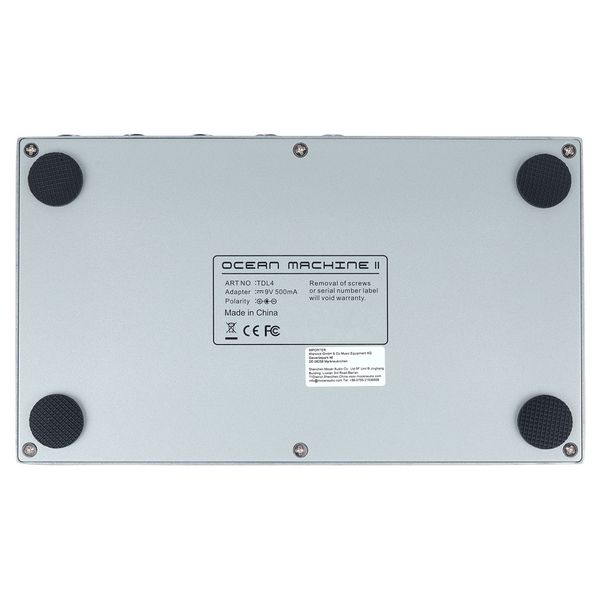
Collegamenti sul retro dell’effetto a pedale delay/riverbero Mooer Ocean Machine II per chitarra elettrica

10 Valutazioni dei clienti

4 / 5

uso

Caratteristiche

Suono

Qualità

9 Recensioni

google translate gb
Purtroppo si è verificato un errore, ti preghiamo di riprovare più tardi.
B(
Cleaned-up Ocean Machine II is a must-have stompbox for guitar and synth alike
Bear (GeexTreme) 15.11.2024
The original Ocean Machine offered delays so long and reverbs so deep that the ocean felt as big as the sky. The Ocean Machine II brings them back, but with better control and quality overall.

With a quirky blue and white colour scheme the OG OM looked distinctive – if hard to read sometimes – but you could tell it wasn't quite finished, with sub-menus in the default "Roman" font used by Chinese OEMs and some features not quite how you'd expect.

Users weren't told how the bypass worked, so a lot of reviews said it lacked a true bypass even after firmware updates addressed the trails on/off control, and the stereo imaging wasn't quite as it should be. Both of these things have been fixed in the Ocean Machine II, the former by just making it really clear that the 'trails on' mode disables true bypass.

For anyone using the beat-driven delays and effects, the appearance of MIDI clock sync on the Ocean Machine II is extremely welcome. The original OM never got this promised feature – for a device that plays heavily on tempo and beat-division delays. This is the headline change introduced for the Ocean Machine II for most users, and it makes those five-pin DIN ports really useful as you can sync delays to your sequence AND add parameter changes as well. In a MIDI-driven studio the Ocean Machine II's potential really comes alive.

The physical hardware hasn't changed much. The familiar heavy, metal-cased box still has the weirdly flexible LCD screen protector (though the fonts and UI have been polished) and comprehensive array of knurled metal control knobs, but the layout has changed so Delay A and B read left to right, the coloured knobs make it easy to distinguish which effect you are modifying, and at long last, those MIDI ports can receive clock sync as well as a full set of CC controls for really dynamic effects in a studio or live environment (with the right hardware).

Weirdly, there's a USB-C port but it is only for firmware updates, not MIDI; the old OM received updates over MIDI and was notoriously fussy, sometimes being 'bricked' by incompatible MIDI hardware, but surely the USB could have been MIDI as well?

The choice to keep USB away from power supply and audio makes more sense though, since the Ocean Machine II is reassuringly free of digital noise, clicks and chirps often associated with DSP devices and USB power in particular.

Sounds-wise, the delay effects are the same roster, but with slightly softer, wider dynamic range and clarity. You can still find the brittle, shimmering harmonics and artefacts of some effects, but the reverbs are a little nicer, more realistic-feeling.

With a much longer looper (it also sounds better, to my ears, though I can't put my finger on why) the potential for a four-minute song over two repetitions is within reach. However, you have to remember that it doesn't have a memory for the recorded backing track – if you want to keep it, pop a little SD-card audio recorder inline with the outputs. Such a trick will also let you 'preload' your looper for future performances.

Few owners of the original complained about the sound quality, though – there really is very little on the market like this effects pedal, and what does compete on ability cannot come close on price.

There is a true bypass – there always was, but now the manual makes it clear that if you want DSP trails so effects don't suddenly cut off, the bypass is soft. The looper is longer - more twice the time of the original, at 120 seconds (two minutes!) - and still sounds great with intuitive control for overdubbing including 1/2 speed and reverse effects.

The C4 Air Switch of the original Ocean Machine doesn't appear to be compatible, you will want the new (smaller, metal) F4, but once again it seems the Looper can't be controlled remotely this way. It can be controlled with MIDI CC though, and there's a handy reference to all MIDI CC parameters in the unit's menus.

The new UI is easy to read with signal in/out clearly seen, and the black on silver front panel is also rather friendlier to eyes and challenging lighting environments (if less cool to look at).

In some ways it feels like the Ocean Machine II is what happens when your talented but chaotic friends grow up and get real jobs.

If you don't have any outboard effects, the Ocean Machine II is a great first-purchase to pair with synths or guitar/bass (I use mine as an external send-return on a DAW) – working with a simple synth such as the Behringer ProVS Mini, and the OM II looper, you can pretty much build a whole track up over two repetitions of that 120-second limit.

As an existing, and happy, Ocean Machine user upgrading, I would have liked to see C4 Air Switch support, looper via remote buttons. and USB MIDI. However, the updates to support MIDI clock, better stereo clarity, more stable and polished OS and longer looper times are enough to make the Ocean Machine II an upgrade worth paying for. I miss the funky blue design though!

Offering better value than before the Ocean Machine II comes with an appropriate power supply and also has a four-year warranty when registered.
uso
Caratteristiche
Suono
Qualità
25
4
Segnala un abuso

Segnala un abuso

google translate gb
Purtroppo si è verificato un errore, ti preghiamo di riprovare più tardi.
CA
Bottom of the ocean
Captain Ash 09.11.2024
I'd wanted one of these for a few years so when the mark 2 arrived, it was a no brainer.
I have a number of delay pedals but this has a number of unique algorithms. Unfortunately I wasn't impressed to say the least.
uso
Caratteristiche
Suono
Qualità
4
16
Segnala un abuso

Segnala un abuso

google translate de
Purtroppo si è verificato un errore, ti preghiamo di riprovare più tardi.
M
Sehr solide
M-F-K 14.09.2025
Ein sehr solides Effektgerät.
Einfach in der Bedienung, gut im Sound und mit vielen Möglichkeiten.

(Leider ist eine der kleinen Potikappenschrauben defekt; Thomann kümmert sich aber um Ersatz.)

Es gibt zwei Delays, einen Reverb und einen Looper, die
pro Programm in Reihe oder teilweise parallel angeordnet werden können. Ich hätte mir einen Send-Return für ein weiteres Effektgerät gewünscht.

Fast alle Parameter sind sofort zugänglich.
Alle anderen sind ein paar Klicks entfernt, können aber auch über MIDI gesteuert werden.

Leider ist der Shimmer-Effekt zwar vorhanden, aber unspektakulär. Ein
bisschen mehr „Strymon Nightsky“ wäre schön.
uso
Caratteristiche
Suono
Qualità
3
0
Segnala un abuso

Segnala un abuso

google translate de
Purtroppo si è verificato un errore, ti preghiamo di riprovare più tardi.
S
Fast gut.
Slartibartfast. 13.04.2026
Eigentlich eine ziemlich gute Idee, zwei Delays und ein Reverb findet man ja nicht so oft. Dass jetzt auch endlich MIDI-Clock Sync dabei ist, ist auch eine gute Sache. Über das neue Design kann man streiten, aber man guckt ja eh die meiste Zeit nicht hin sondern spielt sein Instrument.

Ich hätte mir auch mehr Variation bei den Delays gewünscht, viele der Variationen sind nicht besonders unterschiedlich, finde ich, und ein Reverse Delay z.B. such man da vergebens.

Was aber leider gar nicht geht ist die Stereo-Verarbeitung, das war schon bei mk1 ein Problem, und hat sich offenbar nicht geändert: nicht nur, dass einige der Delay-Algorithmen nur die Mono-Summe der Eingangskanäle verarbeiten, sie verändern auch das Stereobild des trockenen Signals. Beim Reverb hab ich das dann gar nicht mehr getestet, sondern das Teil gleich zurück geschickt.

Gitarristen merken das natürlich nicht, die haben ja nur ein Mono-Signal.

Ach ja, die Bedienung könnte eleganter und konsistenter sein, es gibt ja schon lange etablierte Design-Patterns für UIs mit klickbaren Encodern. Ich verstehe auch, warum das in Bänken mit je 3 Presets angeordnet ist, aber ein Modus, wo man mit dem Drehrad einfach durch die Presets gehen kann wäre schon auch kein Fehler gewesen bei einem Teil, das durch die Knöpfe auch zum Desktop-Betrieb einlädt. Und nur 30 Presets? ist schon einfach lächerlich wenig.
uso
Caratteristiche
Suono
Qualità
0
0
Segnala un abuso

Segnala un abuso