



Al contenuto della pagina

Processore multieffetto

  • 4 processori ARM quad-core (16 DSPs)
  • 1600 algoritmi
  • Possibilità di creare catene di effetti complesse
  • Ampio schermo a colori
  • 8 misuratori a LED regolabili
  • Audio USB a 16 canali
  • Fino a 96 kHz
  • Controllabile a distanza tramite l'App software Remote Control per Mac/Windows e il plug-in DAW
  • 3 slot per espansioni MADI e Dante opzionali
  • Dimensioni (L x P x A): 48,3 x 31,7 x 8,9 cm
  • Peso: 6,4 kg

Collegamenti:

  • 8 ingressi di linea: D-Sub25
  • 2 ingressi di linea: XLR
  • 8 uscite di linea: D-Sub25
  • 2 uscite di linea su XLR
  • Ingresso e uscita AES/EBU
  • 4 porte USB
  • S/PDIF coassiale e ottico/ADAT
  • Ingresso e uscita Word Clock
  • MIDI In/Out/Thru
  • 2 ingressi per pedale: jack 6,3 mm
  • Collegamento Ethernet
  • In catalogo dal Ottobre 2018
  • Numero di articolo 441712
  • Unità incluse 1 Pezzo
  • Formato Rack 19" Si
  • Effetti salvabili Si
  • MIDI-compatibile Si
  • Connettore del footswitch Si
  • Ingresso microfonico No
€ 8.399
Tutti i prezzi incl. IVA
Disponibile entro 2-3 settimane
1

Harmonizer di nuova generazione

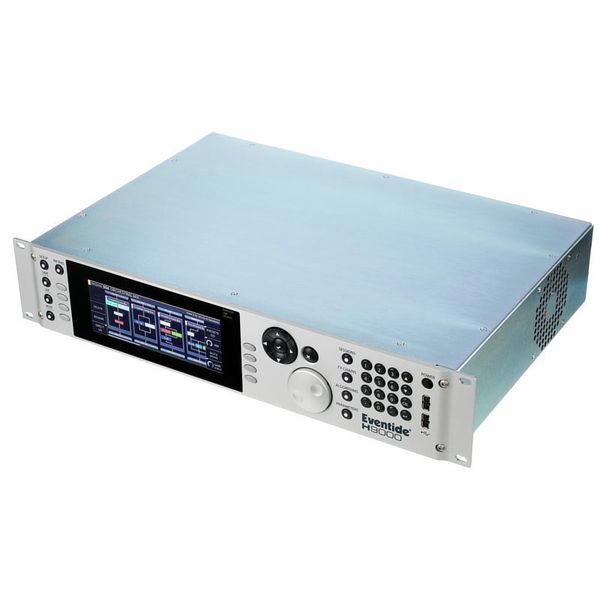
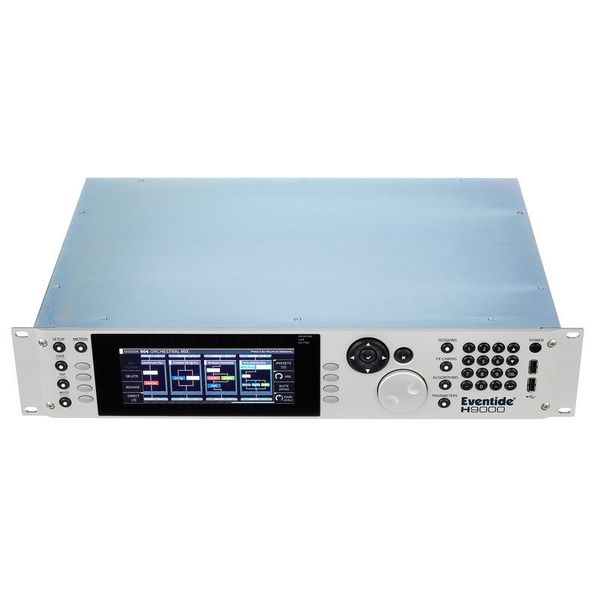
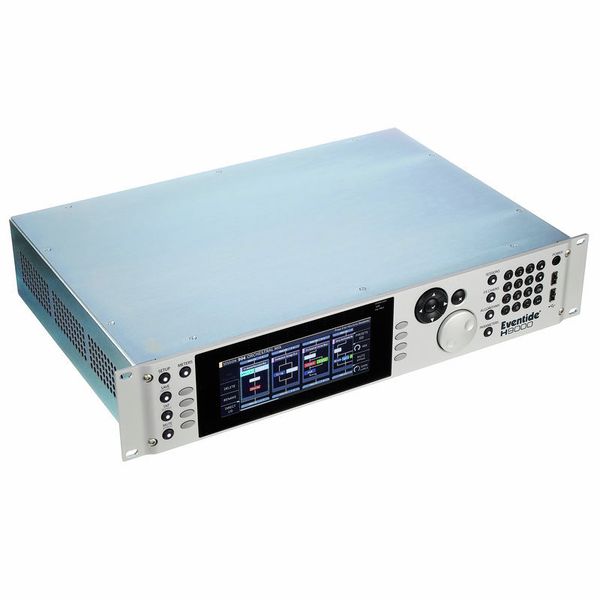
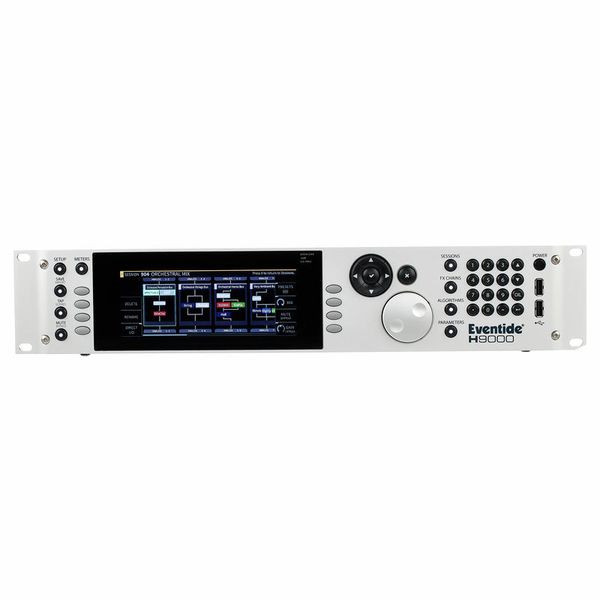
L'H9000 di Eventide è un'unità multieffetto che si propone come nuova versione dell'H8000FW, dotata ora di quattro processori Quad Core ARM per utilizzare in parallelo un massimo di 16 effetti stereo. È a tal fine che l'H9000 è dotato di una nuova funzione denominata FX Chain, che consente di creare fino a quattro catene di effetti con un massimo di quattro algoritmi. All'interno della catena FX, gli effetti possono essere utilizzati in diverse configurazioni in serie e in parallelo. Sul pannello frontale, l'H9000 dispone di un ampio schermo a colori e di un layout classico, completato da ulteriori tasti funzione contestuali ai lati e da tasti funzione retroilluminati. Il software Emote in dotazione non garantisce solo un controllo completo di tutte le funzioni del dispositivo, ma offre anche una navigazione simile a quella del pannello frontale, così da lavorare in un ambiente familiare anche in digitale.

Processore multieffetto Eventide H9000 Harmonizer

Collegamenti e funzioni per tutti i gusti

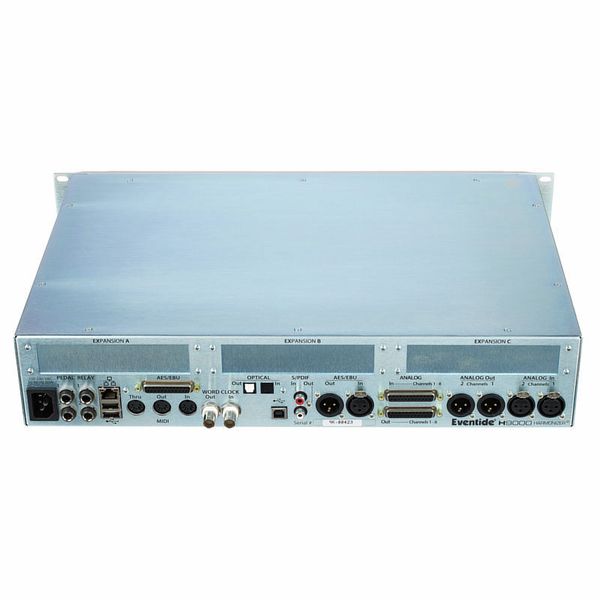
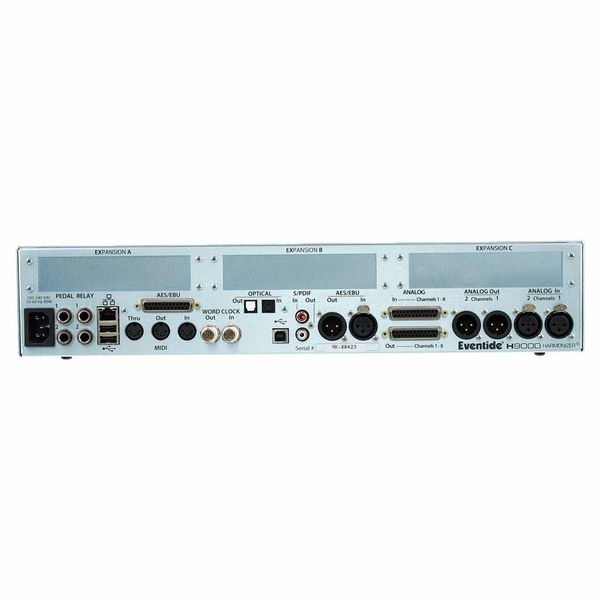
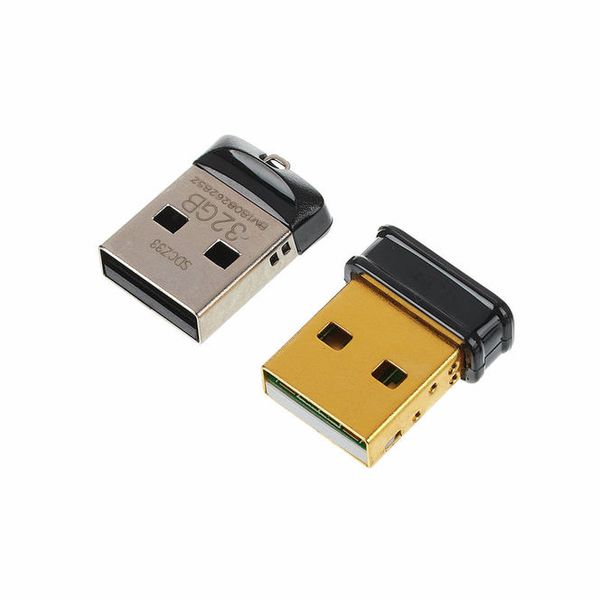
Il dispositivo multicanale H9000 occupa 2 unità rack (2U) nel montaggio laterale e dispone di opzioni I/O complete, possibilità di espansione e funzionalità di rete. Sul retro sono presenti otto ingressi e uscite analogici, nonché otto interfacce digitali AES in formato Sub D. I canali AES 1, 2, i primi due ingressi e uscite analogici sono inoltre disponibili in versione XLR; altre opzioni di collegamento digitale sono SPDIF e ADAT. Particolarmente significativi sono gli slot per espansioni Pro Tools, MADI, Dante, Ravenna e AES67, ciascuno dei quali è in grado di elaborare fino a 32 canali I/O. L'H9000 supporta tutte le frequenze di campionamento più comuni (da 44,1 a 96kHz), ad eccezione di ADAT a causa della mancanza di supporto S/MUX. Il collegamento al computer avviene tramite USB, LAN o WLAN (dongle incluso nella confezione).

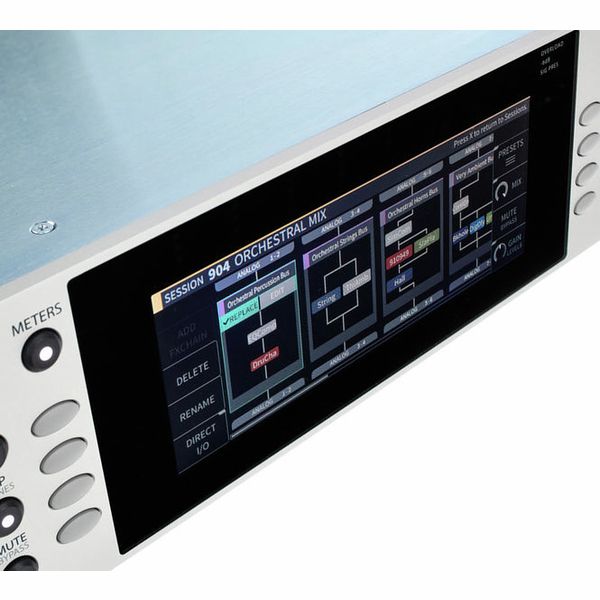
Display del processore multieffetto Eventide H9000 Harmonizer

Strumento complesso per budget elevati

Dotato di una libreria estremamente ricca, che include effetti di nuova concezione, i classici Eventide e tutti gli effetti H9, l'H9000 non ha nulla da invidiare ai suoi predecessori: la qualità dei 1600 algoritmi è eccellente. E grazie al software Emote con funzione FX Chain e alla potenza di calcolo migliorata, gli effetti possono essere utilizzati in modi completamente nuovi. Una scheda audio integrata consente inoltre di operare come con un'interfaccia audio USB a 16 canali. Tutti gli otto ingressi e uscite analogici possono essere utilizzati nella finestra Direct I/O con le opzioni di routing interne, in modo da poter ampliare le configurazioni esistenti con otto convertitori di alta qualità o una patchbay. Integrare un H9000 in studio richiede tuttavia un notevole investimento economico, probabilmente alla sola portata dei professionisti.

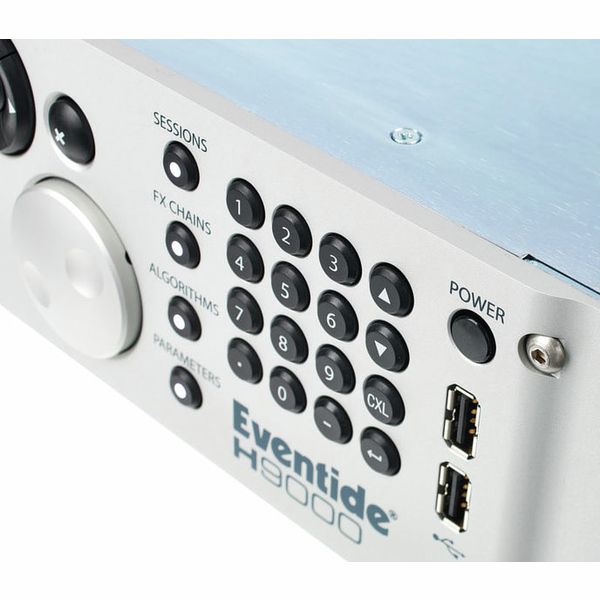
Pannello di controllo del processore multieffetto Eventide H9000 Harmonizer

Su Eventide

Il produttore statunitense Eventide è uno dei pionieri nell'ambito della tecnologia audio digitale. L'azienda è attiva sin dai primi anni '70 e iniziò la propria attività sviluppando prodotti per il settore broadcast ed effetti di delay digitali. Già nel 1974 presentò l'H910, un pitch shifter rivoluzionario per l'epoca. Pietra miliare nel campo degli effetti digitali fu poi l'H3000 (1986), che riscosse grande successo negli studi di registrazione, nelle esibizioni dal vivo e tra i musicisti professionisti. Le successive versioni di questo modello diventarono sempre più potenti, fino ad arrivare all'attuale prodotto di punta, l'H9000. Dal 2007 Eventide sviluppa anche pedali compatti, destinati principalmente a chitarristi e tastieristi. Gli algoritmi Eventide sono attualmente considerati tra i migliori sul mercato.

Il software Emote

Il controllo da remoto può avvenire tramite applicazione stand-alone Emote per Mac e PC, o tramite una versione plug-in (nei formati VST, AU, AAX). Il software Emote propone un'interfaccia utente intuitiva che semplifica notevolmente le operazioni. Le configurazioni di setup, le catene FX, gli algoritmi e le impostazioni predefinite possono essere trascinate in modo intuitivo dalla finestra del browser alla finestra principale utilizzando il metodo “drag and drop”. L'interfaccia presenta anche una serie di schede che consentono, tra l'altro, di accedere direttamente alle proprietà dei dispositivi, ai menu di configurazione e alle catene FX. I parametri possono essere controllati facilmente tramite MIDI o USB: basta un click del mouse sul rispettivo controllo per aprire una finestra menu con le opzioni di mappatura. La versione plug-in permette anche di automatizzare i parametri nella DAW.

Pannello posteriore con collegamenti del processore multieffetto Eventide H9000 Harmonizer

1 Valutazioni dei clienti

1 / 5

uso

Caratteristiche

Suono

Qualità

1 Recensione

google translate gb
Sfortunatamente si è verificato un errore, La preghiamo di riprovare più tardi.
e
Plugins are better, stay away.
ekoloud 14.11.2018
So how to start,
I was excited about the arrival of this machine to my studio but, unfortunately, did not last long.
I really wanted to be amazing, I really wanted to keep it but, you will see why I had no other option but return it.
Because its a complex machine I first read the manual. Seems an easy to operate device and the software (terrible looking and not user-friendly at all) helps to be faster to edit things. The display has a low resolution and does not look nice for today standards and for this price.
With time I felt comfortable enough to be fast using only the hardware dials and that is the pleasant side of using a machine like this.
The device looks great and the buttons and jog wheel are super nice as well however, on the first day of operation I started to hear an annoying sound from the jog wheel...there was a loose screw inside!! For a machine this price that is quite unacceptable. The fix is super easy but it's so unreachable that my only option was to send it back to be opened by a professional. That was out of the question so, moving on to the sound.
After I set it up trough adat and the machine was finally sounding, I decided to try the plates. I am a reverb freak and wanted to see how the h9000 could hold on against the Uad Emt plate. Guess what? The h9000 had no chance against the plugin. The h9000 plate algorithm is not nice, the tails sound very springy and metallic in a bad way and no matter how hard I tried to tweak the settings I could not get it to sound as good as the Uad. I mean even a free plate plugin from sound toys sounded better then the Eventide.
I thought probably the plates were not the h9000 biggest selling point and I moved on to halls and rooms.
Here, the comparison was again with the Uad but this time with a Lexicon. While I could have similar results to my ears Uad was still a winner. Again that springy tail was not as obvious as on the plate but was still there. Maybe you could find a use to them but hey, for 7000¤ sounding similar to a plugin is not really favouring the hardware.
I moved on again and tried the chorus. Again plugin seems to be a winner.
Moved to Distortion. Sound toys was a winner without much effort.My 20 year old Korg AM8000R is better in most cases also(tip tip, it costs around 150¤today)
I was started to get very sad and disappointed...there was nothing so far that this machine could do exceptionally well.
I thought "ok eventide is known as a harmonizer so, at least the harmonizer must be great". Reality is, Eventide could not even copy their very own harmonizer h910 to the h9000. From what I hear even eventide plugin of the h910 sounds better than the algorithms in the h9000, for real!!
So at this point, I tought there really must be something wrong with the algorithms porting onto this machine. Everybody speaks wonders of the h9 pedals and the h8000 but this one has something wrong with it.
I read that porting the algorithms to this ARM-based machine is a very risky process. Also read somewhere that Eventide had to create a A.I to go through all the presets and compare if they sound the same as in the original machines. That for me already sounds very risky and prone to problems.

When I inquired eventide with my dissatisfaction and question them about the future of the machine they were very reserved about it.
They also told me they are thinking about porting some of their plugins into the h9000. I asked what is the big advantage of having the h9000 if I can run the plugins in the computer? Or what is the future plans with this machine? Did not get an answer on that. Too bad, they had a chance to convince me keeping it.

So yeah, 7000€ (in 2018) for a efx processor that does not even sound as good as plugins? you have to be crazy to get one.

What went wrong ? I don't know. Will it getter better? It's better they do it fast and come with amazing and exclusive h9000 algorithms. A few crashes and other inconveniences were also observed where the machine had to restart but, no big deal here I guess. Just updates needed.

Conclusion:
The H9000 has great potential according to the specs with the expansion cards and upgradable processors but needs to mature first.
Very nice looking machine. Nice feeling controls. Poor display resolution. Sounds bad. Maybe all the issues I reported here will easily be fixed with coming updates so standby on this machine, let pro reviews come out wait 2 or 3 years and test it in a shop with some good plugin to compare the machine with.
One last word, I think now almost in 2019 with the advance on computer power and more people developing amazing plugins i think the era of "hardware sounds better" is almost over. There are some cases where hardware still has the edge but that might decrease over time.
I will wait and maybe give it a try again in a few years.


Thank you Thomann for your return service.
uso
Caratteristiche
Qualità
Suono
229
49
Segnala un abuso

Segnala un abuso